
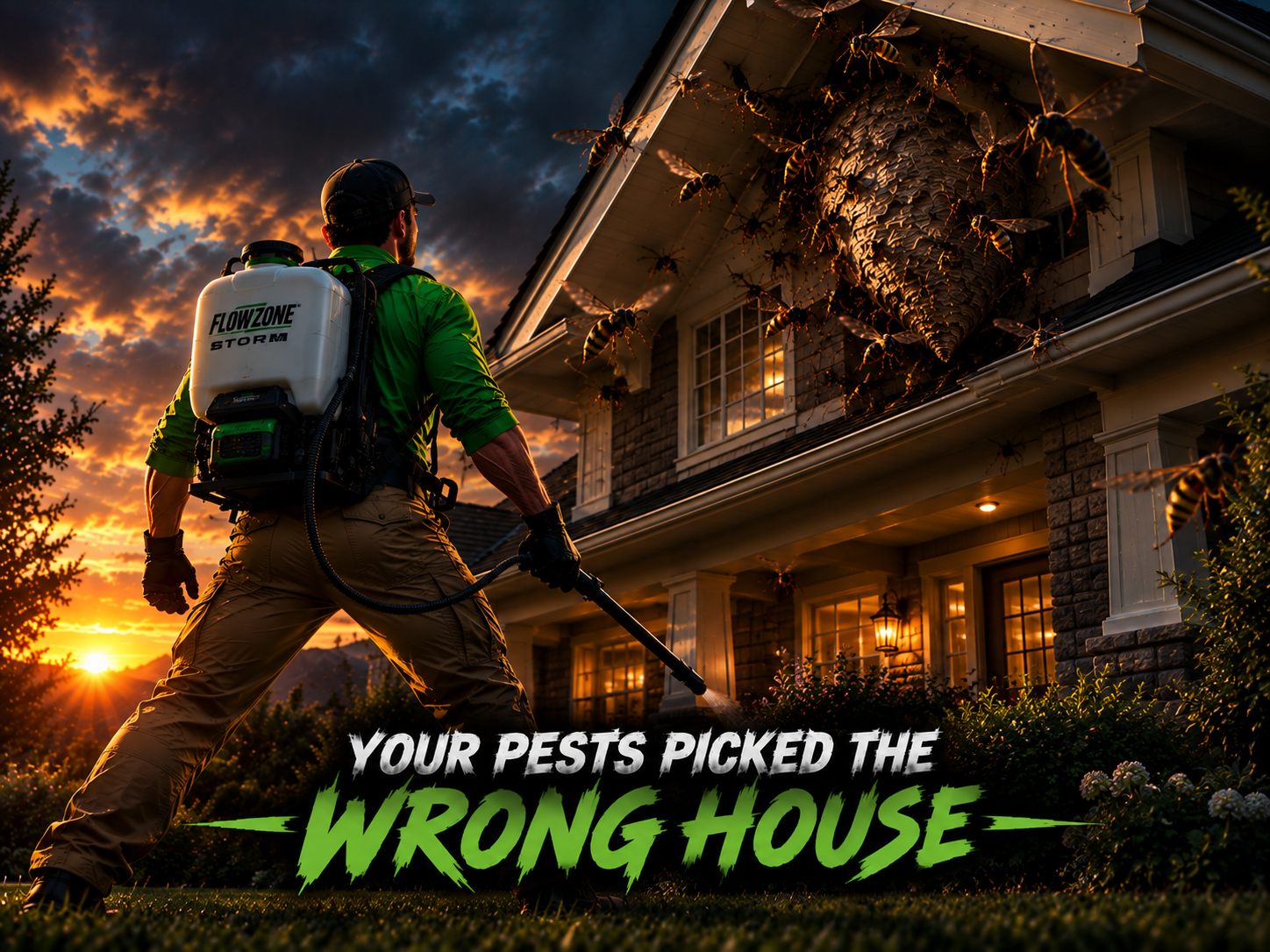
Wasp Control Without a Year-Round Service Plan
If wasps are you main pest concern, you may not need quarterly pest control. My annual Wasp Control Service is timed for mid-summer, when wasp colonies are established and their activity is becoming much more noticeable around homes and yards.
One targeted service. Once a year. Professional wasp control when you actually need it.
Why Wasps Seem to Suddenly Appear
Wasp activity changes dramatically throughout the season. Colonies begin small, but as they grow through the spring and summer, more workers are produced and their activity around homes becomes increasingly noticable.
By mid-summer, you may start seeing wasps regularly around eaves, rooflines, sheds, decks, playground equipment, landscaping, and other areas around your property.
That’s why I recommend scheduling annual wasp control around mid-summer. Rather than paying for pest control throughout the entire year just for wasps, the service is timed around the part of the season when they become a significant nuisance.
Four Years Specializing in Stinging Insects
Before starting Expert Pest Control Services, I spent four years specializing in stinging insects. I’ve dealt with wasp nests in all kinds of locations and learned how different species behave, where they’re likely to build nests, and what to look for when inspecting a property.
That experience matters because wasp control isn’t just about spraying the first nest you can see. A thorough service means looking around the property for activity and finding nests that may otherwise go unnoticed.
Finding the Problem is Part of the Service
Anyone can see a large exposed wasp nest hanging from an eave. The harder part is identifying activity that isn’t immediately obvious.
When I service a property for wasps, I’m not just looking at the nest you called me about. I inspect accessible areas around the structure for additional wasp activity and nests that may also need attention.
What to Expect During Your Service
1. Inspect the property
I’ll inspect accessible areas around the home for wasp activity and nesting sites.
2. Identify active nests
I’ll look beyond the obvious problem area for additional accessible nests around the structure.
3. Treat the wasp activity
I’ll select the appropriate treatment based on the location and type of activity I find.
4. Remove accessible nests when appropriate
Accessible nests can be removed as part of the service when conditions allow.
5. Point out anything else I find
If I notice conditions that are contributing to wasp activity or another pest issue while I’m there, I’ll let you know.
Why Pay for Four Services When You Need One?
If wasps are the only pest you’re concerned about, quarterly pest control may be more service than you need.
That’s why I offer Wasp Control as a standalone annual service. I recommend scheduling it around mid-summer, when wasp activity around homes is becoming much more noticeable.
You get a professional inspection and treatment during the part of the year when wasps are most likely to be a problem without signing up for pest control every three months.
What Can You Do to Reduce Wasp Activity?
Keep garbage cans tightly closed. Use trash cans with tight-fitting lids, especially for outdoor garbage. Food waste can provide an easy food source for wasps.
Clean up sugary spills and drinks. Wasps are attracted to sugary substances, so clean up spilled soda, juice, and other sweet foods or drinks when eating outside.
Don’t leave meat or food scraps outside. Wasps can also be attracted to me at and other protein sources, particularly when colonies are actively feeding developing larvae.
Watch for early nest construction. Small nests are much easier to address before the colony has had months to grow.
Maintain obvious openings around the structure. Sealing appropriate gaps can reduce opportunities for wasps to establish nests in protected areas.
If you find a nest, you don’t need to get close enough to identify exactly what it is. Let me inspect it and determine the appropriate way to handle it.
Which Service is Right for You?
Annual Wasp Control is a good fit if wasps are your primary concern and you otherwise don’t have significant pest problems around your home.
Semi-Annual Boxelder Bug Control is a good fit if boxelder bugs, stink bugs, and other seasonal invaders are your primary concern. Treatments are performed in April and October to target seasonal pest activity without requiring quarterly service.
Quarterly Pest Control may be the better choice if you also want ongoing protection from spiders, ants, earwigs, millipedes, and other common pests throughout the year. Wasp nest removal is already included as part of your quarterly service.
What to Expect After Treatment
The goal of the service is to eliminate the wasp activity found during the visit and reduce wasp problems around the property. However, wasps are active outdoors and new colonies or activity can develop later.
Your annual service is strategically timed to address the period when wasp activity typically becomes most noticeable. If you discover a significant wasp problem outside your normal annual service, contact me and we can determine the appropriate next step.
Enjoy Your Yard Without Worrying About Wasps
You shouldn’t have to spend the summer watching for wasps every time you step outside. If wasps are your main concern, annual Wasp Control gives you targeted professional service without paying for a year-round pest control plan you don’t need.
Schedule your annual Wasp Control service and let an experienced stinging insect specialist handle the problem.